
Curiosity Is the Future of Learning: Why Schools Must Design for Questions, Not Just Answers
Rethinking Student Curiosity in an Age of Standardisation and Artificial Intelligence
Introduction
Walk into almost any preschool classroom and you will find children asking an endless stream of questions. They wonder why the sky changes colour at sunset, how birds know where to fly, why leaves fall from trees, or what happens beyond the stars. Curiosity appears effortlessly, driving exploration long before formal schooling begins. Yet somewhere along the educational journey, something changes. By the time many students reach adolescence, classrooms often become quieter—not because learners have discovered all the answers, but because they have gradually stopped asking meaningful questions.
This transformation should concern every educator.
For generations, schools have been remarkably successful at organising knowledge, delivering curriculum, and measuring achievement. Yet they have been considerably less successful at protecting one of the most powerful drivers of learning: curiosity. In educational systems increasingly shaped by standardised assessments, crowded curricula, performance metrics, and time constraints, students often learn that success depends upon producing correct answers efficiently rather than pursuing thoughtful questions. The consequence is subtle but significant. Curiosity, once abundant, risks becoming secondary to compliance.
This matters because curiosity is not an educational luxury. Research across cognitive psychology, neuroscience, and learning sciences consistently demonstrates that curiosity enhances attention, strengthens memory, increases intrinsic motivation, and promotes deeper conceptual understanding. Curious learners persist longer with challenging tasks, seek connections across ideas, tolerate uncertainty more effectively, and engage more actively in constructing knowledge. Curiosity is therefore not simply an emotional disposition; it is a powerful cognitive catalyst that influences how learning occurs.
The emergence of artificial intelligence makes this issue even more pressing. Technologies can now provide immediate answers to an unprecedented range of questions. Information has become abundant, accessible, and increasingly automated. In such a landscape, the competitive advantage of future learners will not lie in memorising facts that machines can instantly retrieve. It will lie in asking thoughtful questions, recognising meaningful problems, evaluating evidence critically, and pursuing understanding beyond the first available answer.
Perhaps, then, education has been asking the wrong question. Instead of wondering how we can make students more curious, we should ask whether our schools are intentionally designed to cultivate—or inadvertently suppress—that curiosity. After all, curiosity is rarely a fixed personality trait. More often, it is a response to the environments in which learners think, question, and grow.
If education hopes to prepare students for a future defined by complexity rather than certainty, schools must move beyond rewarding correct answers alone. They must become places where thoughtful questions are recognised as evidence of learning rather than interruptions to it.
Why Schools Accidentally Suppress Curiosity
Few educators begin their careers intending to diminish students’ curiosity. On the contrary, most teachers enter the profession because they hope to inspire exploration, creativity, and a lifelong love of learning. Yet even the most committed educators often work within systems whose structures unintentionally discourage the very behaviours they seek to cultivate. The challenge, therefore, is not a lack of professional commitment but the cumulative influence of organisational routines, assessment practices, and curriculum expectations that shape everyday classroom experiences.
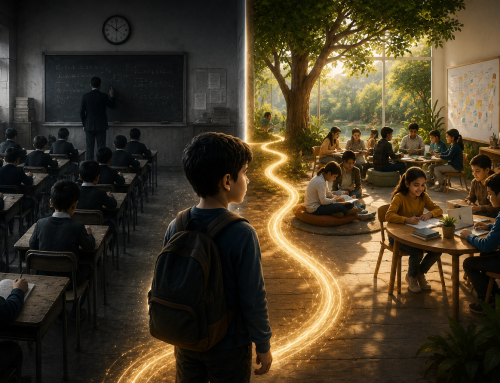
One of the most significant influences is the increasing emphasis on certainty. Traditional models of schooling frequently reward students for producing correct answers efficiently, while offering comparatively fewer opportunities to formulate original questions, explore ambiguity, or investigate problems without predetermined solutions. Over time, learners may begin to associate academic success with certainty rather than inquiry. In such environments, curiosity gradually shifts from being a valued intellectual disposition to becoming a perceived distraction from measurable achievement.
High-stakes assessment can unintentionally reinforce this pattern. When educational success is primarily measured through standardised examinations, teachers often face considerable pressure to prioritise curriculum coverage, examination preparation, and measurable outcomes. These priorities are understandable, yet they inevitably reduce the time available for open-ended discussion, sustained investigation, and exploratory learning. Students become increasingly skilled at identifying expected answers but may have fewer opportunities to develop the intellectual confidence required to ask questions that have no single correct response.
Curriculum design also plays a critical role. Overly crowded curricula leave limited space for learners to pause, reflect, pursue emerging interests, or make meaningful connections across disciplines. The pressure to progress through prescribed content can inadvertently communicate that completing the syllabus is more important than developing genuine understanding. Curiosity, however, rarely flourishes under constant acceleration. It requires intellectual space, thoughtful dialogue, and the freedom to linger with complex ideas before moving to the next topic.
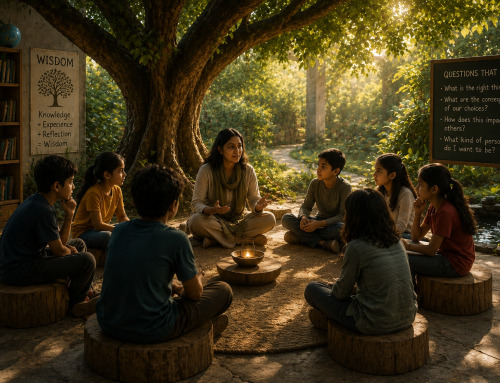
Equally important is the role of classroom culture. Students are unlikely to express curiosity if they fear making mistakes, appearing uninformed, or asking questions that differ from those anticipated by the teacher. Psychological safety—the confidence that one’s ideas will be respected even when incomplete or unconventional—is therefore fundamental to inquiry-based learning. Classrooms characterised by trust, respectful dialogue, and intellectual risk-taking encourage learners to view questions not as evidence of weakness but as the starting point of discovery.
The rapid expansion of digital technologies and artificial intelligence introduces an additional layer of complexity. While these tools have dramatically improved access to information, they also create a temptation to value speed over reflection. Students increasingly encounter environments where immediate answers are celebrated, yet meaningful learning often depends upon remaining with uncertainty long enough for deeper understanding to emerge. The educational challenge is therefore not technological innovation itself, but ensuring that efficiency does not replace intellectual exploration as the defining characteristic of learning.
Recognising these patterns is not an argument against accountability, assessment, curriculum standards, or educational technology. Each serves an important purpose within contemporary education. Rather, it is an invitation for educators and school leaders to ask a more fundamental question: Do the systems we design reward curiosity as much as they reward correctness? The answer to that question may determine whether schools prepare students merely to recall existing knowledge or to generate the new ideas upon which future progress depends.
The Science of Curiosity: Why Questions Drive Learning
Curiosity has long been recognised as one of the most powerful drivers of human learning. Far from being a vague personality characteristic or an innate talent possessed by only a few learners, curiosity is increasingly understood as a cognitive and motivational process that shapes how individuals pay attention, remember information, solve problems, and construct knowledge. Across psychology, neuroscience, and educational research, a consistent finding emerges: when learners are genuinely curious, learning becomes deeper, more durable, and more meaningful.
One of the most influential explanations comes from psychologist George Loewenstein’s Information Gap Theory, which proposes that curiosity arises when individuals recognise a gap between what they know and what they want to know. This awareness creates a form of cognitive tension that motivates exploration and sustained inquiry. Rather than viewing uncertainty as something to avoid, curious learners perceive it as an invitation to investigate. Effective teaching therefore does not simply provide answers; it deliberately creates opportunities for students to recognise meaningful questions before introducing solutions.
Educational psychologist Jerome Bruner similarly argued that learning is most powerful when learners actively discover relationships, patterns, and ideas for themselves. His work on discovery learning emphasised that education should cultivate inquiry rather than passive reception of information. Students who investigate, hypothesise, question, and test their understanding are more likely to develop transferable knowledge than those who merely memorise isolated facts. Curiosity, in this sense, is not an optional enrichment activity but a central mechanism through which understanding develops.
Contemporary neuroscience reinforces these perspectives. Research suggests that curiosity enhances attention and prepares the brain to encode new information more effectively. When learners become genuinely interested in a question or problem, they are more likely to sustain concentration, connect new ideas with existing knowledge, and retain information over longer periods. Curiosity therefore influences not only motivation but also the cognitive processes that underpin comprehension and long-term memory.
Developmental psychologist Alison Gopnik extends this understanding by describing children as natural investigators who learn through exploration, experimentation, and hypothesis testing. Young learners constantly generate explanations about how the world works, revising those explanations as they encounter new experiences. From this perspective, curiosity is not a distraction from learning; it is the very process through which learning unfolds. Education is most effective when it builds upon this natural disposition rather than replacing it with passive compliance.
These insights carry particular significance in an era increasingly shaped by artificial intelligence. When technology can instantly provide information, curiosity becomes the distinguishing capability that enables learners to decide which questions are worth asking, which sources deserve trust, and which problems require deeper investigation. Information may be increasingly automated, but intellectual curiosity remains profoundly human. It is curiosity that transforms information into inquiry, inquiry into understanding, and understanding into innovation.
Viewed collectively, the research presents a compelling conclusion: curiosity should not be regarded as an incidental outcome of effective teaching. It is one of the essential conditions through which meaningful learning occurs. Schools that intentionally cultivate curiosity are not merely creating more engaging classrooms; they are developing learners who possess the intellectual resilience, creativity, and critical judgement required to navigate an increasingly complex and unpredictable world.
Designing Schools That Reward Questions Instead of Memorisation
If curiosity is essential to meaningful learning, then it cannot be left to chance. It must be intentionally cultivated through curriculum design, classroom culture, instructional practice, and educational leadership. The question is not whether students possess curiosity, but whether schools create environments in which curiosity is recognised, encouraged, and sustained.
One of the most effective ways to nurture curiosity is to shift the focus of learning from information delivery to intellectual inquiry. Classrooms should not simply present knowledge as a collection of established facts; they should invite students to investigate authentic problems, examine competing perspectives, and construct evidence-based conclusions. Inquiry-based learning, project-based learning, and interdisciplinary investigations all create opportunities for learners to experience the satisfaction of discovering ideas rather than merely receiving them.
Assessment also deserves careful reconsideration. When success is measured exclusively through the reproduction of correct answers, students naturally learn to prioritise certainty over exploration. While factual knowledge remains important, schools should also value the quality of students’ questions, the originality of their thinking, the strength of their reasoning, and their willingness to revise ideas in response to new evidence. Such approaches communicate that learning is not simply about arriving at answers but about developing increasingly sophisticated ways of thinking.
Teachers play an equally significant role in shaping curiosity through everyday interactions. The questions educators ask, the discussions they facilitate, and the intellectual risks they encourage all influence how students perceive learning. A classroom where questions are welcomed, misconceptions are explored respectfully, and uncertainty is treated as a natural part of inquiry fosters both confidence and intellectual resilience. In contrast, environments where mistakes are viewed primarily as failures may unintentionally discourage the very curiosity that drives deeper understanding.
Educational leaders also influence curiosity through the cultures they create. Schools characterised by trust, collaboration, and professional autonomy are more likely to encourage teachers to experiment with innovative pedagogies that stimulate inquiry. When leaders value reflection alongside accountability and recognise learning as an evolving process rather than a race toward predetermined outcomes, they create organisational conditions where curiosity can flourish for both teachers and students.
The rise of artificial intelligence makes this work even more urgent. As intelligent technologies increasingly provide instant explanations and automate routine cognitive tasks, the distinguishing capability of future learners will not be their ability to retrieve information, but their capacity to ask insightful questions, challenge assumptions, synthesise diverse perspectives, and pursue knowledge with intellectual curiosity. These are not competencies that emerge through technology alone; they are cultivated through educational experiences deliberately designed to value exploration over mere efficiency.
Ultimately, the schools best prepared for the future will not necessarily be those with the most advanced technologies or the highest examination scores. They will be those that preserve one of education’s oldest and most powerful traditions: creating learning environments where thoughtful questions are valued as highly as correct answers. In such schools, curiosity is not treated as an incidental characteristic of a few exceptional learners but as a defining feature of educational excellence itself.
Cafe Learning Reflection
Education has always been driven by questions long before it was organised around answers. Every scientific discovery, literary masterpiece, technological innovation, and social transformation began with someone who was curious enough to ask, What if?, Why?, or Could there be another way? Curiosity is therefore not simply the beginning of learning; it is the beginning of progress itself.
Yet modern education sometimes sends a contradictory message. We encourage students to be creative, innovative, and adaptable while simultaneously rewarding certainty, speed, and the reproduction of established knowledge. In doing so, we risk preparing learners to navigate yesterday’s problems rather than tomorrow’s possibilities.
The rise of artificial intelligence makes this challenge even more significant. When information is available within seconds, possessing answers becomes less distinctive than asking thoughtful questions. The future will increasingly belong to individuals who can recognise problems worth solving, challenge conventional assumptions, connect ideas across disciplines, and remain intellectually curious in the face of uncertainty. These capacities cannot be downloaded, automated, or generated at the touch of a button. They are cultivated through educational experiences that value inquiry as much as achievement.
Perhaps the true measure of an exceptional school is not how efficiently it delivers information, but how successfully it preserves the curiosity with which every child begins life. If students leave school still eager to question, explore, imagine, and learn, education will have accomplished something far more enduring than academic success alone. It will have nurtured minds prepared not only to understand the future, but also to help create it.
Selected References
Bruner, J. S. (1961). The Act of Discovery. Harvard Educational Review, 31(1), 21–32.
Gopnik, A. (2009). The Philosophical Baby: What Children’s Minds Tell Us About Truth, Love, and the Meaning of Life. Farrar, Straus and Giroux.
Loewenstein, G. (1994). The Psychology of Curiosity: A Review and Reinterpretation. Psychological Bulletin, 116(1), 75–98.
OECD. (2019). OECD Learning Compass 2030: A Series of Concept Notes. OECD Publishing.
Ryan, R. M., & Deci, E. L. (2020). Intrinsic and Extrinsic Motivation from a Self-Determination Theory Perspective: Definitions, Theory, Practices, and Future Directions. Contemporary Educational Psychology, 61.
UNESCO. (2021). Reimagining Our Futures Together: A New Social Contract for Education. UNESCO Publishing.
World Economic Forum. (2023). The Future of Jobs Report 2023. World Economic Forum.
Berlyne, D. E. (1960). Conflict, Arousal, and Curiosity. McGraw-Hill.
Engel, S. (2015). The Hungry Mind: The Origins of Curiosity in Childhood. Harvard University Press.